Nicosia, March 2013.
In front of a closed bank branch stands a queue that doesn’t move an inch. A notice hangs on the glass: “Temporarily closed. Cash withdrawals limited.” On the same street, an improvised exchange opens in a hurry; within a few hours, under the table, gold coins are being sold—and, for many people for the first time in their lives, bitcoin. Two logics, one goal: to survive a financial lockdown.
Two decades later, we live in a world where central banks quietly accumulate physical gold, while Wall Street has opened the door to spot Bitcoin ETFs. Some prefer a metal with no counterparty; others, code with no bank. How do we compare without cheerleading? By going into the field and listening to people.
1) Size and Liquidity: An Ocean vs. a Fast-Growing River
Gold is an oceanic liquidity pool tested over centuries. It sits in India’s wedding bangles, in Frankfurt’s vault bars, in private safes’ coins, and in physically backed ETFs. Trading happens 24/5 worldwide: London (OTC), Zurich, New York, Shanghai. In good times and bad, you can find a buyer or a lender (leasing) almost anytime.
Bitcoin is more like a fast-growing river. From a garage project in 2009, it has grown into a global network with a supply capped at 21 million units, with miner rewards periodically halved (the so-called halving). When spot ETFs arrived, the investment bridge to pension accounts and conservative intermediaries became simple: no crypto wallet needed—just a ticker. Trading is 24/7; weekends don’t exist.
In practice: gold is deeper, broader, and older; bitcoin is faster, more continuous, and less domesticated. If gold resembles the Atlantic Ocean, bitcoin is the Amazon during flood season—magnificent and dangerous at the same time.
2) Who Trusts What—and Why: States, Families, Funds, Individuals
States and central banks → gold.
The arguments are dry and powerful: no counterparty risk, politically neutral, globally accepted. In a crisis, gold can be pledged for liquidity; it can be repatriated; it needs no SWIFT or another state’s approval. That’s why states hold it even when bonds are yielding and currencies are stable—it’s a sovereignty insurance policy.
Individuals, funds, and tech optimists → bitcoin.
For some, BTC hedges against monetary experimentation. For others, it’s a ticket to digital scarcity that can cross borders without banks—an internet connection is enough. For diaspora families, it means faster transfers; for entrepreneurs in countries with capital controls, an escape valve; for tech funds, an options bet on a new monetary layer of the internet.
The gray zone: more and more family offices combine both—gold for “if the worst happens” and bitcoin for “if the best happens.”

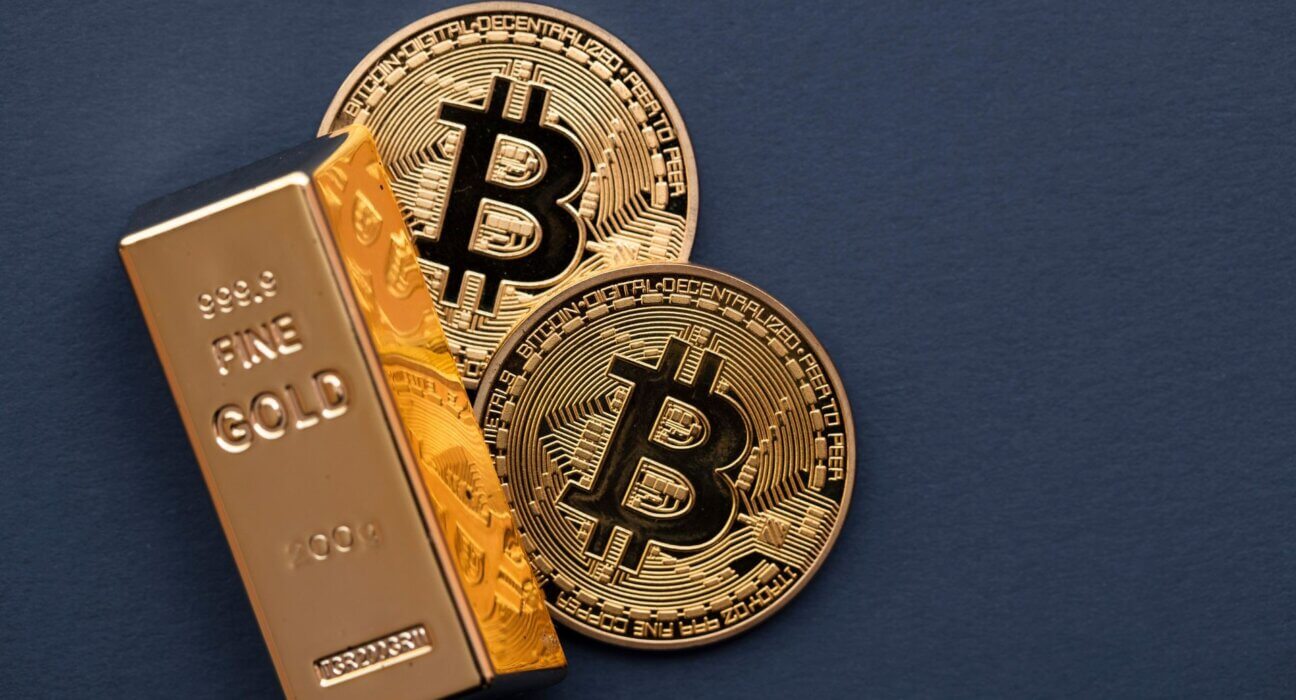
Image: Gold and Bitcoin trust comparison showing why states rely on gold and individuals choose Bitcoin as digital gold.
3) Volatility and Correlations: A Turbo Rocket vs. a Parachute
Gold has proven itself through many crises as a portfolio parachute. When geopolitical risk flares or real rates slip, it often acts as a safeguard. It’s not perfect, but it’s frequently the best defensive player on the floor when others panic.
Bitcoin is mostly a risk asset: in risk-on periods it can move with equities (high beta), while in risk-off moments it may decouple—sometimes upward (if independence commands a premium), sometimes downward (when crypto-specific shocks expose internal ecosystem risks).
A note of reason: don’t compare them as rivals in the same discipline. Gold is a marathon runner, durable and slowly shifting the weights of trust. Bitcoin is a sprinter that sets records in the right conditions and stumbles in the wrong ones. In a portfolio, each does what it’s built to do.


Do not buy a single gram of gold or silver until you have read this gold valuable information.
- Did you know that you can pay up to 59% more than the market price of gold?
- How can you significantly reduce the price of gold and silver?
- You can get up to + 1/3 more precious metals for your savings!
- Physical investment gold and silver of the highest quality. Good delivery.
BONUS! Extremely tax efficient: you pay absolutely no tax!
Enter your name and email address now to participate for free.

4) Energy, ESG, and the Real World: Who Leaves the Smaller Footprint?
Bitcoin consumes energy because proof-of-work secures the network. Critics point to electricity use; proponents highlight surplus and stranded sources (hydro, wind, flared gas), and note that miners chase low-cost energy, incentivizing new capacity. Reality lies in between: the mining energy mix is changing and subject to public scrutiny.
Gold’s carbon footprint lies mainly in mining and refining. The industry has two mitigants:
- Recycling (old jewelry and industrial scrap continuously re-enter the loop), and
- ESG and traceability (from conflict-free sourcing to LBMA Good Delivery certifications).
From an investment angle: ESG filters at large institutions currently digest gold more easily than classic proof-of-work, but this can change with grid decarbonization and miner transparency. For both assets, the same rule applies: choose ethical suppliers/custodians; avoid dubious sources.
5) Security and Custody: A Key, a Safe, or a Custodian?
Bitcoin—freedom and responsibility.
Self-custody is the purest form of ownership: not your keys, not your coins. But it comes with responsibility—lose the seed, lose the funds. Many therefore choose multisig (e.g., 2-of-3), reducing loss or theft risk. Others opt for ETFs, gaining price exposure and professional custody without private keys. Crypto history flashes a neon warning: don’t leave too much on exchanges. Custodian collapses aren’t theory—they’re reality.
Gold—heavy, quiet, and physical.
Physical coins and bars require storage (home safe, bank box, specialized vault), insurance, basic documentation (receipts, serial numbers), and authenticity checks (weight, dimensions, ultrasound/conductivity). Two worlds exist: allocated (the bar/coin is legally yours, recorded by serial) and unallocated (a claim on a custodian). ETFs are liquid and cheaper, but “paper”—in crises, many want metal in hand.
Pro tip: follow best practices for both.
Bitcoin: separate long-term cold storage, multisig, secure backups.
Gold: buy standard coins (Krugerrand, Philharmoniker, Maple Leaf…), keep invoices, know the refinery mark, prefer allocation and a reputable custodian.
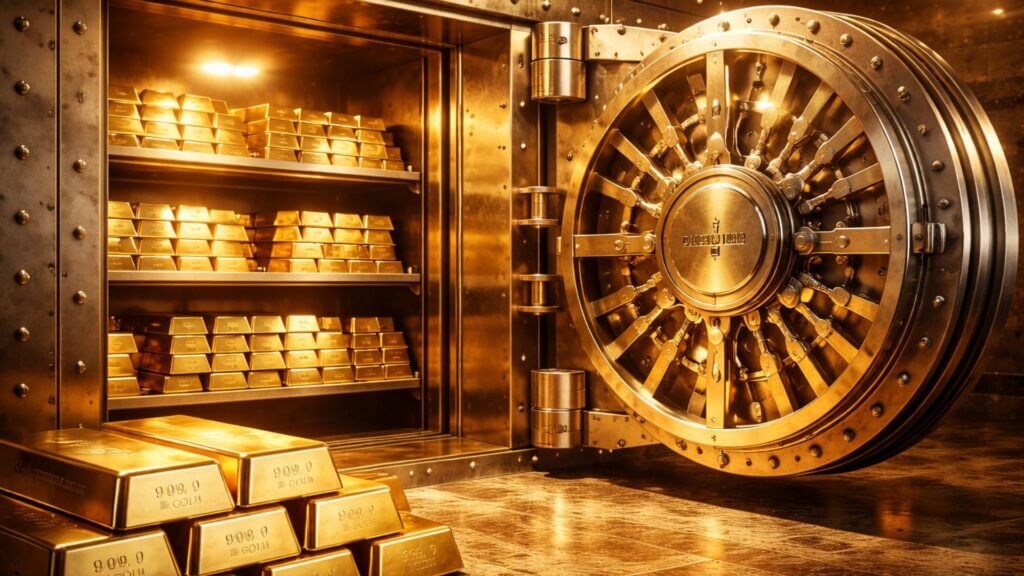
Image: Gold and Bitcoin require different custody approaches, from physical safes and vaults to digital private keys and trusted custodians.
6) Use-Case Frameworks: Three Stories, Three Strategies (Not Advice—Orientation)
A) “Stable Core” — for those who want to sleep well
Profile: steady income, no time for short-term speculation; goal is purchasing-power preservation and a smoother portfolio.
Framework:
- 60–70% quality bonds (varied maturities);
- 20–30% global equities (broad index ETF);
- 5–10% gold (physical or ETF with strong custody);
- up to 3% bitcoin as a tech option via DCA (monthly buys).
- Ritual: rebalance 1–2× yearly. Gold is insurance; bitcoin an option—neither is the center of the universe.
B) “Barbell” — conservative + bold
Profile: accepts volatility on one end, wants a solid core on the other.
- 40–50% short-to-mid bonds + cash for opportunities;
- 8–12% gold (part physical, part via very liquid vehicles);
- 20–35% equities;
- 3–5% bitcoin (ETF or self-custody), ideally split between DCA and tactics (e.g., trimming after strong rallies).
- Ritual: pre-defined exit rules (e.g., trim crypto when it exceeds X% of the portfolio) so emotions don’t take the wheel.
C) “Robust Mobility”— for unstable environments
Profile: entrepreneur or nomad; wants asset mobility and an offline emergency exit.
Framework:
- physical gold in highly recognizable forms (1 oz coins) and, if needed, smaller denominations (1/10 oz);
- multisig bitcoin with distributed keys (another country, trusted relative, safe);
- minimal cash in key currencies.
- Ritual: periodically test access (does multisig still work? are coins reachable?), discreet logistics, no social-media boasting.
7) Edge Stories: — When Theory Meets Bread, Medicine, and a Bus Ticket
Cyprus 2013: A young couple saving for a down payment is told overnight that deposits above a threshold will be taxed. He pulls two gold coins from a drawer—gifts from his grandfather; she learns with a friend how to open a first bitcoin wallet. After days of panic, they pay a private mechanic with gold to buy a used car for cash; bitcoins sent from abroad cover the rent.
Venezuela: A nurse sends remittances to relatives. Traditional transfers are slow and expensive. In practice, they convert part of savings into stable crypto for transfer, while the family exchanges another part into gold or jewelry that’s easier to monetize at the market.
An Indian wedding: Gold is family social capital. When hard years arrive, wedding jewelry is melted into working capital for a small shop. Nobody debates charts—they talk about honor, safety, and keeping the business alive.
Ukrainian border 2022: A refugee leaves with a ring, a necklace, and a phone. Cards don’t work abroad; banks are closed. At a Kraków jeweler, she trades a gold ring for cash and a ticket; in a community kitchen, a volunteer helps set up a crypto wallet for donations. Not ideal—but enough.
PURCHASE OF GOLD. Free information. You can get up to 1/3 more precious metals!
- How can you buy gold and silver for investment?
- Much cheaper.
- We discover how you can reduce seller commissions.
- Highest quality. 999/1000. Good delivery.
Information worth its weight in gold. Completely free
It is not worth buying a single gram until you have this information.
Enter your name and email address now to participate for free.

8) The Most Common Mistakes — and How to Avoid Them
- All in on one horse. Gold or bitcoin—or? No. The most resilient portfolios aren’t creeds; they’re blends.
- Oversized bets at euphoric tops. Both assets have brutal cycles. Prefer DCA and rebalancing to impulse buys.
- Ignoring custody. Addresses, keys, safes, insurance, invoices—these are the foundations. Glitter comes later.
- Buying from the “cheapest” stranger. With gold you risk counterfeits; with crypto, unauthorized custodians. Saving on fees can become the most expensive lesson.
- Neglecting taxes and rules. Countries treat capital gains and VAT differently; crypto adds reporting duties. Check local rules.
9) What Does “Safer” Mean — to Whom?
A retiree measures safety in cash flows and calm: gold as a small hedge; bitcoin as a “maybe”—often none or very little.
A young saver with a 20–30-year horizon thinks in growth options: equities + some bitcoin; gold as a counterweight when real rates fall or geopolitical winds shift.
An entrepreneur thinks operationally: how fast can I access funds in a crisis? Gold for offline scenarios; bitcoin for mobility and cross-border needs; the core still in cash and high-grade bonds to pay suppliers on Monday morning.
10) A Short, Honest Summary (Stick This on the Fridge)
- Gold is the analog foundation: it pays no coupons but owes nothing to anyone. In crises, it often outperforms most alternatives.
- Bitcoin is a digital option: it can succeed spectacularly—or hurt spectacularly. Best suited for disciplined small exposure, not Aunt Mary’s pension fund.
- It’s not “either–or”; it’s “how much—and why.” Be clear on reasons: gold for stability and insurance; bitcoin for a growth option and mobility.
- Most important: proper custody is half the success—for both.

Anecdotes (Expanded)
- Cyprus 2013: when a banking lockdown turned a “safe deposit” into stress within days, two old solutions—metal and code—kept life moving.
- Vanezuela: hyperinflation erased wages; families survived with a mix of gold chains, dollars, and digital transfers.
- Slovenia 2022: a small electronics importer, facing volatile supplies and FX, moved part of liquidity into short bonds and a sliver into gold; when a pricier container had to be paid, a gold coin became collateral for a bridge loan from an acquaintance within an hour.
FAQ
In scarcity and portability, it has advantages. In history, liquidity, legal frameworks, and global acceptance, gold still leads.
For shock absorption and systemic uncertainty—gold. For a tech/growth option—bitcoin, with higher volatility and operational risks.
You own price exposure and a custodian—not private keys. Convenient, not sovereign.
It depends on goals. A framework that works for many: 5–10% gold as insurance and 1–3% bitcoin as an option—with disciplined rebalancing. Not advice—orientation.
Bitcoin: multisig and secure seed backups.
Gold: documents, serial numbers, verifiability, and insurance.
Quick Investor Facts
When checking the gold price today, remember that the gold price per gram for 24k gold price bars differs from the 18k gold price used in jewelry. If you are looking to sell gold, always check the current gold spot price and the scrap gold price to ensure a fair gold exchange rate from gold buyers.