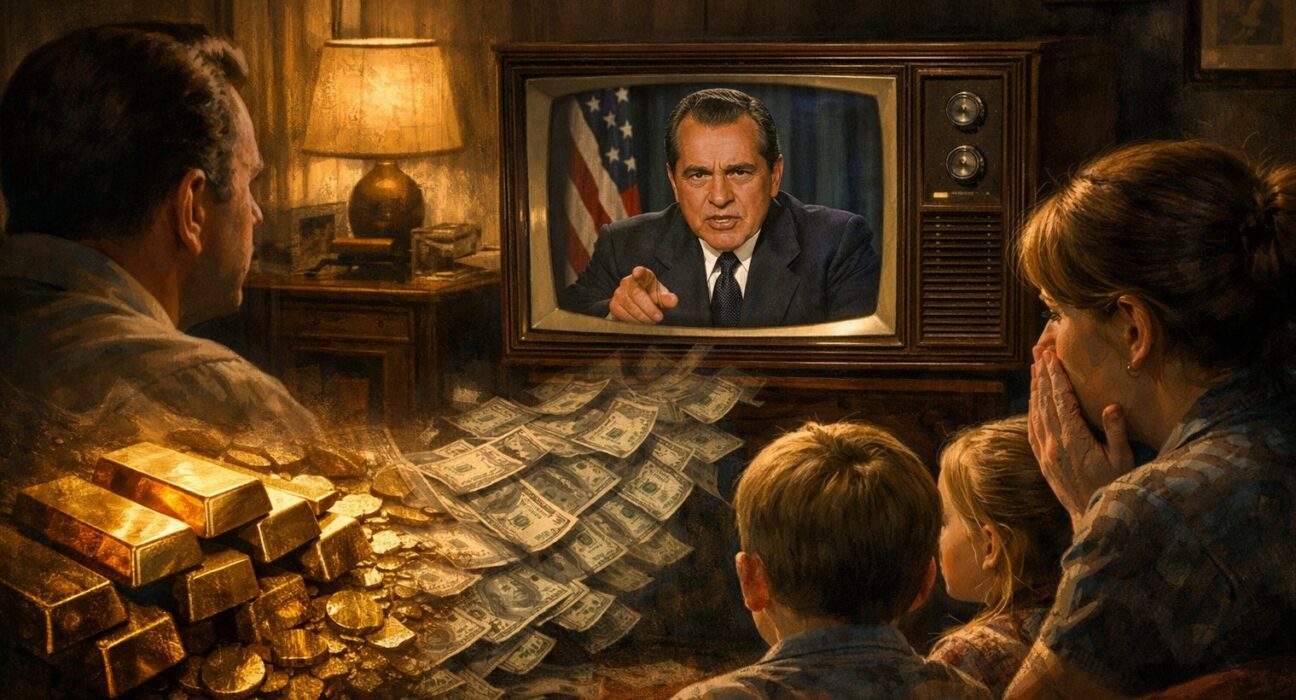
Sunday, August 15, 1971. Late evening in the United States. Americans sit in front of their televisions, waiting for the president. Richard Nixon, dressed in a dark suit and speaking in a tense voice, delivers a message that would forever change money:
The United States would “temporarily” close the gold window.
The dollar, which for a quarter century had been convertible at $35 per ounce of gold, would no longer be exchangeable for gold — not even for central banks.
At the same time, Nixon imposed a 90-day freeze on wages and prices and introduced a 10% import surcharge to “protect American jobs.”
The word “temporary” would become one of the most permanent euphemisms in monetary history.
The Last Summer of Gold: Why $35/oz Was Unsustainable
By the late 1960s, the Bretton Woods system was breaking down.
- The U.S. faced:
- The Vietnam War
- Expensive social programs
- Growing budget deficits
- A flood of dollars circulating abroad
Economist Robert Triffin explained the contradiction:
The world needed dollars for trade and reserves — but producing those dollars undermined confidence in gold convertibility.
Central banks began asking a dangerous question:
“Is there enough gold in Fort Knox for all these dollars?”
- By 1968, pressure became unbearable. The London gold market temporarily collapsed, and a two-tier system emerged:
- Official gold price: $35
- Market price: floating
The system was already cracking.
Camp David: The Decision Behind Closed Doors
- That weekend, Nixon met advisors at Camp David:
- John Connally
- Arthur Burns
- Paul Volcker
- George Shultz
Connally pushed hardest:
Break free from the “golden chain.”
Soon after, he delivered a famous line to Europeans:
“The dollar is our currency, but it’s your problem.”
This wasn’t just rhetoric — it defined the new global reality.
The Monday After: Markets in Shock
- Because the speech came on Sunday, markets opened Monday in chaos.
- Currency markets froze
- Banks worked overnight
- Confidence in fixed exchange rates collapsed
- In December 1971, the Smithsonian Agreement attempted a fix:
- Dollar devalued to $38/oz
- Wider exchange rate bands
It failed.
By 1973, major currencies began floating freely.


Do not buy a single gram of gold or silver until you have read this gold valuable information.
- Did you know that you can pay up to 59% more than the market price of gold?
- How can you significantly reduce the price of gold and silver?
- You can get up to + 1/3 more precious metals for your savings!
- Physical investment gold and silver of the highest quality. Good delivery.
BONUS! Extremely tax efficient: you pay absolutely no tax!
Enter your name and email address now to participate for free.

Impact on Ordinary People
- The wage-price freeze worked briefly — but once lifted:
- Prices surged
- Mortgages hit double digits
- Savings lost value
- Ads promoted “real assets” like gold and land
- In Europe:
- Germany strengthened its currency
- Switzerland turned to the franc
- The UK and Italy faced inflation and instability
Oil Crises Made It Worse (1973 & 1979)
The monetary shift didn’t cause oil crises — but it amplified them.
- 1973: Oil embargo
- 1979: Second energy shock
- Result:
- Rising fuel and food prices
- Inflation surged globally
Gold became a fear barometer.
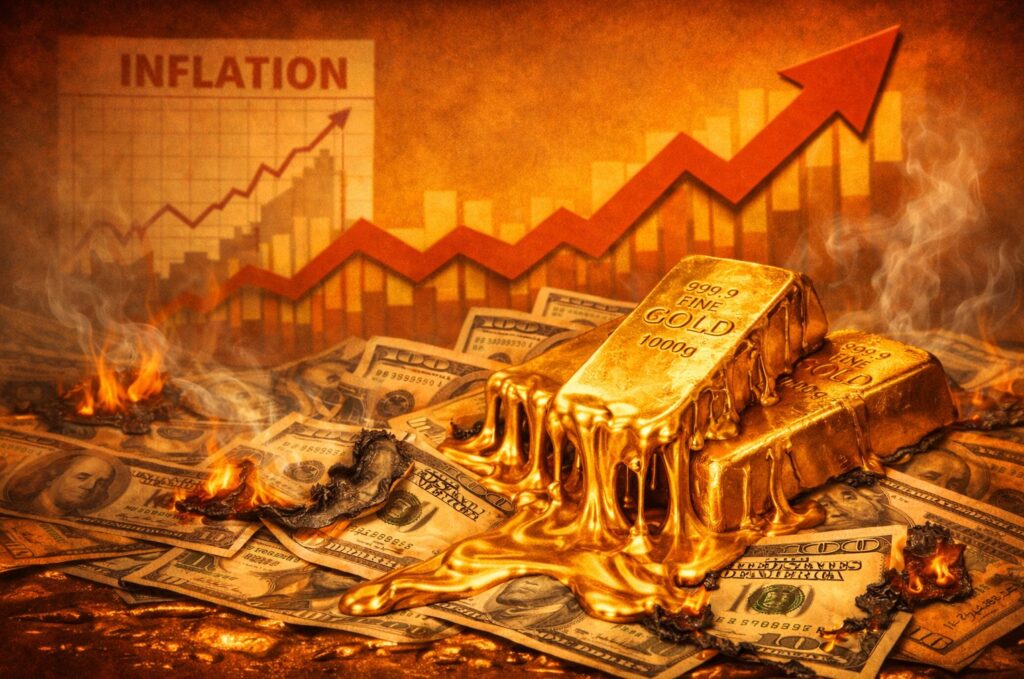
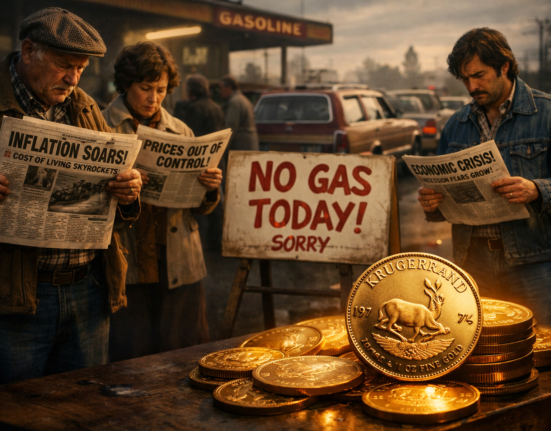
Image: Crises like COVID-19 often lead to market panic and monetary expansion, strengthening gold’s role as a hedge against inflation.
Gold and Silver: Safe Haven and Mania
Gold rose from $35/oz to ~$850/oz by January 1980.
- Notable episode:
- Hunt brothers attempted to corner the silver market
- Across the world:
- Milan: people selling jewelry
- London: gold trading boomed
- Germany: coins circulated symbolically
Psychology was simple:
If paper loses value → buy what cannot be printed.
The Rise of the Petrodollar
After 1973, oil began trading globally in dollars.
- The Petrodollar system meant:
- Oil profits flowed into U.S. banks
- Banks recycled them as global loans
- This led to:
- Latin American debt boom
- Crisis in 1982
Europe: Discipline vs Instability
- Germany: strict monetary policy
- Switzerland: strong currency
- UK: inflation spiral
- Eastern Europe (including Yugoslavia):
- Currency controls
- Dual exchange rates
- Economic instability
Volcker: The Man Who Crushed Inflation
In 1979, Paul Volcker took over the Fed.
- His approach:
- Control money supply
- Let interest rates soar
- Results:
- Interest rates above 20%
- Severe recession
- Inflation finally collapsed
This marked the start of the “Great Moderation.”
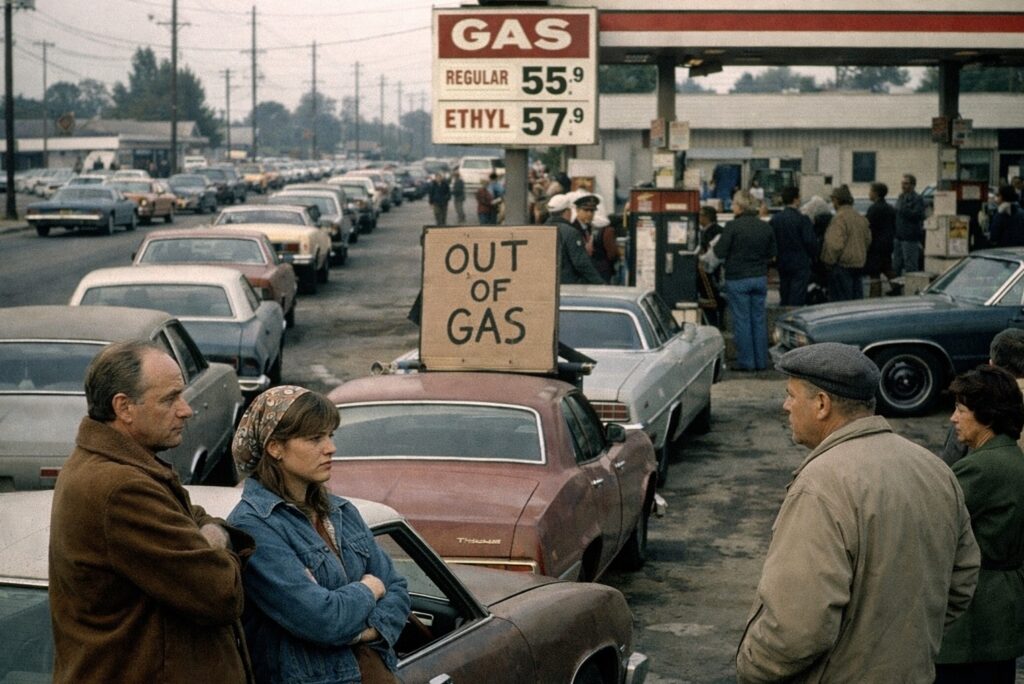
Image: Unlike paper money, physical gold provides tangible security and serves as a trusted hedge against inflation and economic uncertainty.
Business and Financial Innovation
- After 1971:
- Hedging became standard
- Derivatives markets exploded
- Currency risk entered everyday business
Companies learned:
Exchange rates matter as much as production.
PURCHASE OF GOLD. Free information. You can get up to 1/3 more precious metals!
- How can you buy gold and silver for investment?
- Much cheaper.
- We discover how you can reduce seller commissions.
- Highest quality. 999/1000. Good delivery.
Information worth its weight in gold. Completely free
It is not worth buying a single gram until you have this information.
Enter your name and email address now to participate for free.

Jamaica Accords: Gold Officially Dethroned
- In 1976, the Jamaica Accords:
- Ended gold’s official role
- Confirmed floating exchange rates
Gold was no longer money —
but remained a psychological anchor.
Lessons for Savers
- In the 1970s:
- Cash lost value
- Gold and real assets gained
- After Volcker:
- Bonds and stocks regained importance
Key lesson:
A world without a gold anchor requires diversification.
Conclusion: A “Temporary” Decision That Changed Everything
The Nixon Shock of 1971 permanently transformed the financial system:
- The dollar remained dominant — without gold
- Inflation became central to policy
- Gold shifted from money → hedge
Final lesson:
Without a monetary anchor, discipline must replace it — by governments, businesses, and individuals.
FAQ
A decision on August 15, 1971 to end dollar convertibility into gold, combined with wage-price controls and import tariffs.
Due to deficits, war spending, and the Triffin dilemma — too many dollars, not enough gold.
End of fixed exchange rates, rise of inflation, and a new global financial system.
A failed 1971 attempt to stabilize currencies by adjusting exchange rates.
Around $850/oz in January 1980.
A system where oil is traded in U.S. dollars globally.
John Connally, U.S. Treasury Secretary.
Higher prices, expensive loans, and declining savings value.
Paul Volcker, through very high interest rates.
Officially no — but it remains a key safe-haven asset.