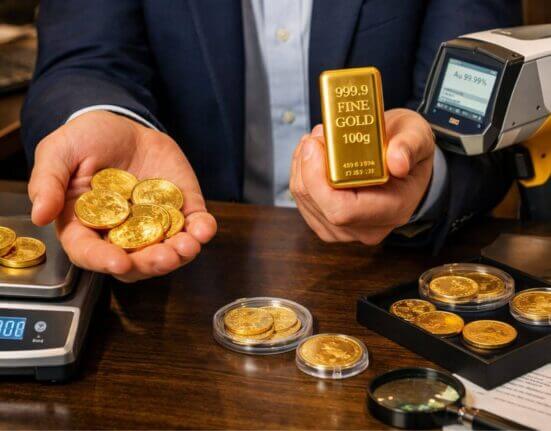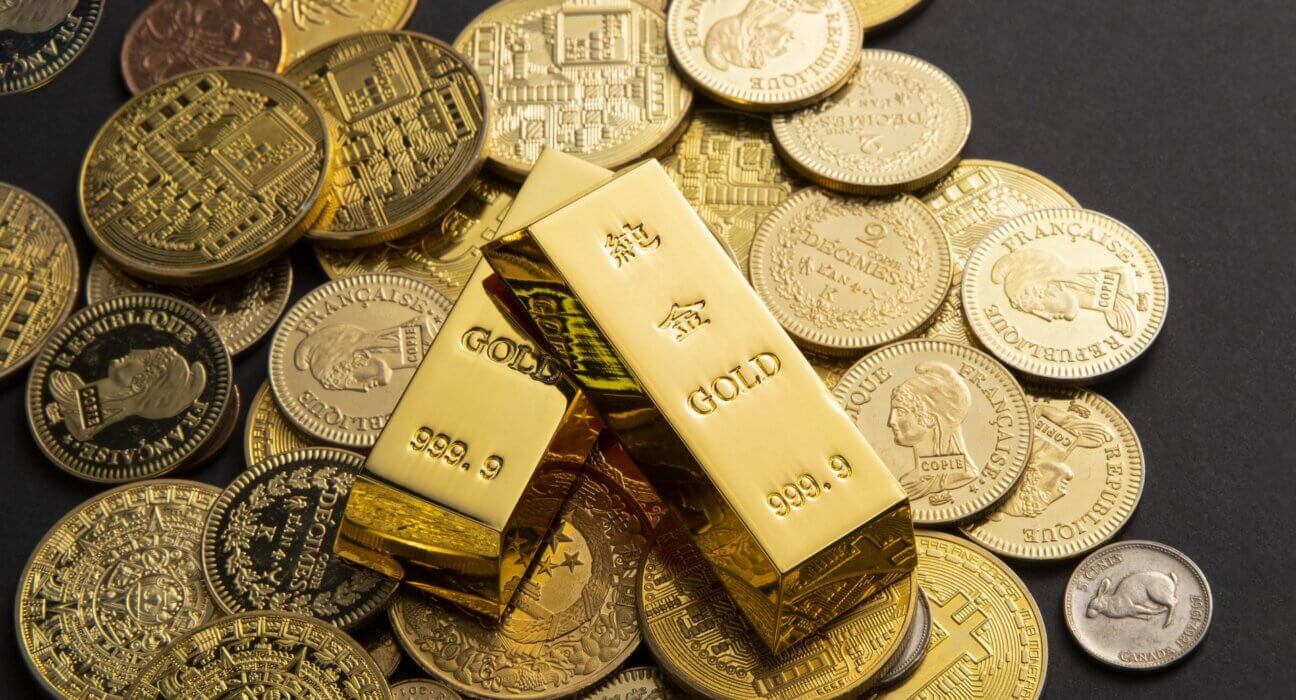
When the media reports that gold has reached new record highs above $5,000 per ounce, many people panic: “Did I miss the train? Is it already too late?” But the truth is far more complex. Once we subtract inflation, compare gold with other asset classes, and view it through the lens of history, we realize that today’s price is nowhere near as high as it seems.
Gold is not just a metal—it is a time machine of value, an asset that survives currencies, crises, and even empires. In this article, we explore the true price of gold, how the gold industry works, its role in the modern financial system, and what the world’s leading experts say about its future.
Nominal vs. Real Gold Price
At first glance, today’s prices look impressive. But let’s look at history:
- In 1980, gold reached $850 per ounce. Adjusted for inflation, that equals nearly $2,800 today.
- The true historical peaks in gold occurred in 1980 and 2011. By historical standards, gold is now trading above those levels even in real, inflation-adjusted terms.
- Since the abandonment of the gold standard in 1971, gold has grown at an average real annual rate of about 7–8%.
As Jeffrey Currie, former head of Goldman Sachs and now at Carlyle Group, notes: “When U.S. Treasuries are no longer sacred, central banks flee to gold.”
This means the price of gold is not merely a reflection of inflation, but primarily of trust in the monetary system.
How the Gold Industry Works
A little-known fact: the gold price is set daily in London, where the London Bullion Market Association (LBMA) operates—a tradition over 100 years old.
Across the Atlantic, however, the COMEX exchange in New York trades dozens of times more “paper gold” (ETFs, futures contracts) than physically exists. This means the real price is often driven not by physical supply and demand, but by financial speculation.
In 2020, when investors massively demanded physical delivery from gold ETFs, reports emerged that some vaults simply did not have enough physical gold. This revealed that the gold market is, in reality, a mix of real metal and paper promises.
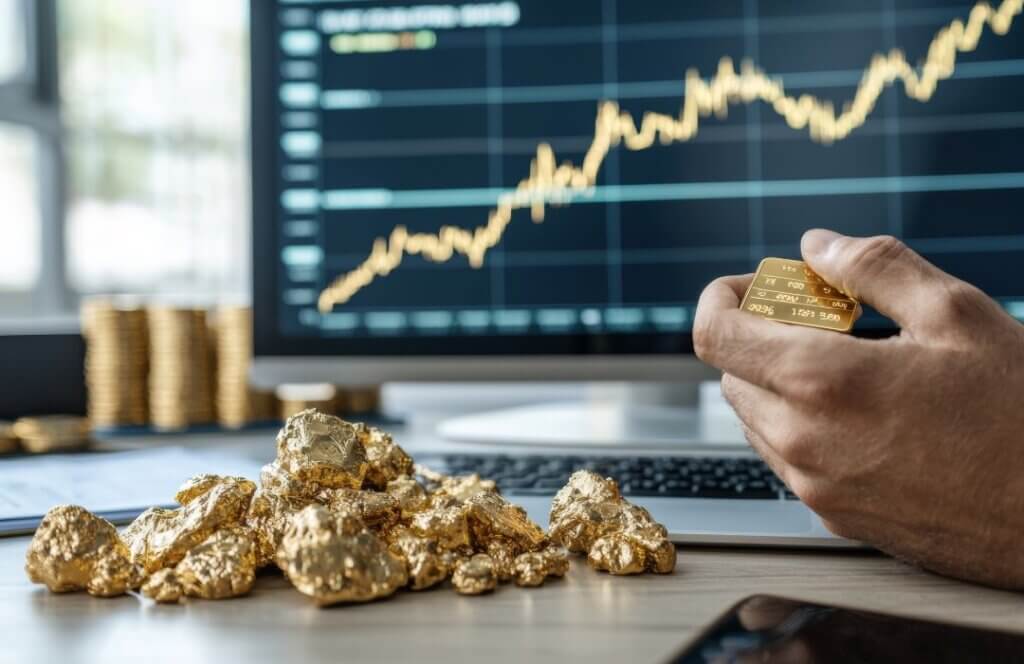
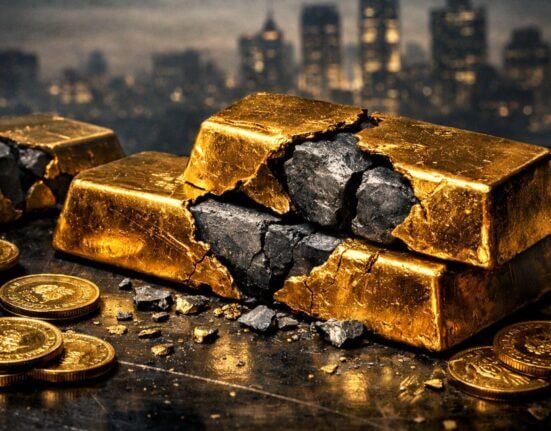
Image: The gold price is shaped not only by physical supply and demand, but also by paper gold trading, financial speculation, and investor confidence.
Gold Compared to Other Asset Classes
One of gold’s strongest arguments is its purchasing power over time.
- Real estate: In 1971, the average U.S. house cost about 500 ounces of gold. Today, it can be bought for around 200 ounces, meaning real estate has actually become cheaper in gold terms.
- Automobiles: A Mercedes S-Class cost 10 ounces of gold in 1980. Today, a comparable model costs about 8 ounces.
- Stock funds: While the S&P 500 has delivered higher nominal returns over the long term, when inflation, crises (2000, 2008, 2022), and taxes are considered, gold has on average preserved—and often increased—real purchasing power.
Gold is not an asset for quick profits.
It is a tool for preserving wealth across generations.
Tax Aspects of Gold
A lesser-known but extremely important factor is taxation:
- Germany: Investment gold is exempt from VAT, which is why many Slovenians and Austrians buy gold there.
- Switzerland: Gold can be purchased without limits and stored in vaults known for the highest security standards.
- United States: Gold is treated as a “collectible,” meaning capital gains are taxed at 28%, higher than stocks.
Tax regulations can significantly affect returns, which is why smart investors always consider where and how they buy gold.
What Regular Saving in Gold Would Mean
What if you bought €200 worth of gold every month?
- Starting in 1985, you would today have over €320,000 in gold—more than the average house in Slovenia.
- Starting in 2000, after 26 years, you would have around €140,000, nearly three times the invested amount.
This is the power of Dollar Cost Averaging—regularly buying small amounts of gold beats inflation and smooths out market shocks.


Do not buy a single gram of gold or silver until you have read this gold valuable information.
- Did you know that you can pay up to 59% more than the market price of gold?
- How can you significantly reduce the price of gold and silver?
- You can get up to + 1/3 more precious metals for your savings!
- Physical investment gold and silver of the highest quality. Good delivery.
BONUS! Extremely tax efficient: you pay absolutely no tax!
Enter your name and email address now to participate for free.

Historical Lessons
Gold has always been at the center of major historical shifts:
- Alexander the Great acquired enormous gold reserves after conquering Persia, which financed his army.
- In the 16th century, Spain brought so much gold and silver from the Americas that it triggered inflation across Europe—yet Spain still declined economically.
- Roosevelt 1933: The U.S. government confiscated gold from citizens and later revalued it at a higher price. The state profited, while citizens lost their inflation protection.
Physical Properties of Gold – Why It Is So Special
Gold is the most malleable metal—from 1 gram, a sheet of 1 m² can be made.
It is one of the few metals with a natural color—its yellow hue results from relativistic electron effects.
Gold is virtually indestructible—almost all the gold ever mined still exists today.

Gold Reserves – How Much Is Left?
An estimated 205,000 tons of gold have been mined worldwide. Melted into a single cube, it would measure just 22 meters per side.
Annual production is about 3,500 tons, meaning global gold reserves grow slower than the world population.
Asteroids in our solar system may contain more gold than has ever been mined on Earth—but space mining remains far in the future.
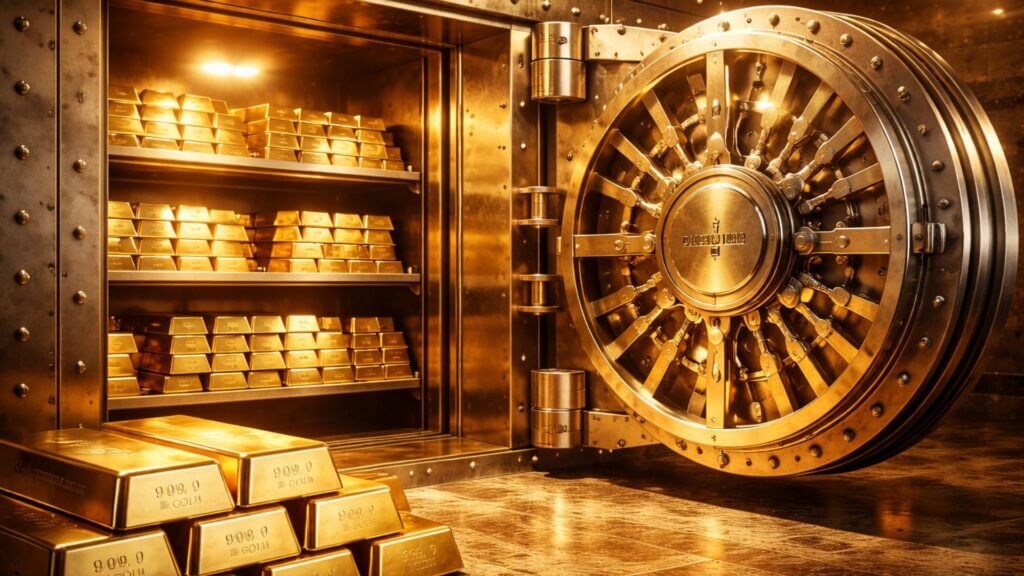
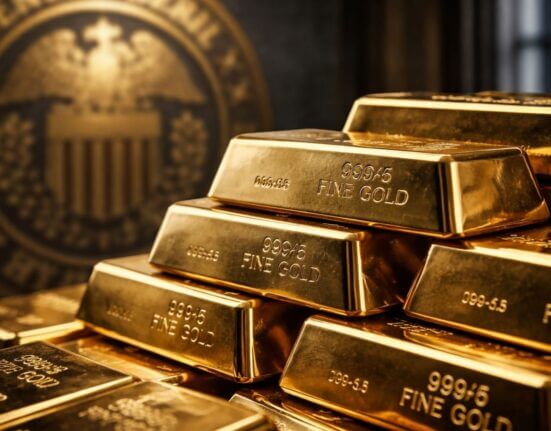
Image: With limited annual production and growing global demand, gold reserves increase far more slowly than the world’s population.
The Role of Gold in the Modern Financial System
Although gold is no longer the monetary base as it was before 1971, its role remains crucial:
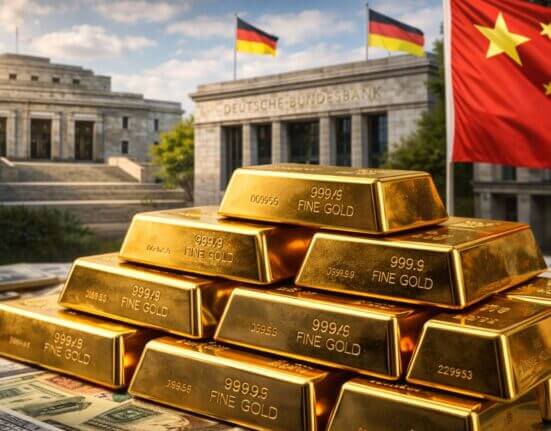
- Central banks—especially China and Russia—are accumulating gold to reduce dependence on the U.S. dollar.
- During crises—COVID-19 in 2020, war in 2022, trade tensions in 2025—gold consistently surged when stocks fell.
- Louise Street (World Gold Council) highlighted in the Q2 2025 report that global gold reserves reached a record $132 billion.
As Natasha Kaneva (J.P. Morgan) states: “Gold’s potential in the coming years lies between $3,700 and $4,000 per ounce.”
Wisdom of Legendary Investors
- Keynes called gold a “barbarous relic,” yet central banks still hold it as a strategic reserve.
- Warren Buffett: “Gold produces nothing, but people will always see it as a safe haven.”
- Jim Rickards: “Gold could reach $15,000 when trust in the dollar collapses.”
- Napoleon: “Gold is the only thing that does not age.”
PURCHASE OF GOLD. Free information. You can get up to 1/3 more precious metals!
- How can you buy gold and silver for investment?
- Much cheaper.
- We discover how you can reduce seller commissions.
- Highest quality. 999/1000. Good delivery.
Information worth its weight in gold. Completely free
It is not worth buying a single gram until you have this information.
Enter your name and email address now to participate for free.

Conclusion: The Truth About Gold’s Value
The true price of gold is not the number on the screen.
It is a combination of inflation, trust, history, taxes, psychology, and physics.
Gold is neither “expensive” nor “cheap.”
It is a universal measure of trust, passed from generation to generation. As expert data—from Currie to Street and Kaneva—suggests, gold’s future remains bright.
If history teaches us anything, it is this:
When crisis strikes, gold is the one asset that never loses trust.
✨ May Fortuna be with you—and may your wealth be protected by gold.